The Benefits of “Good-Enough” Perfection
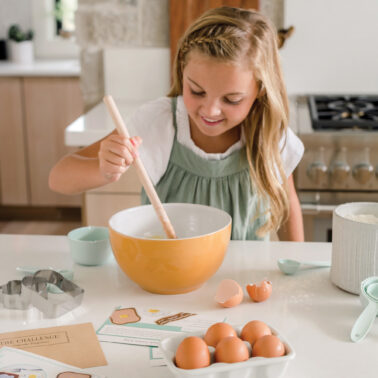
When kids reach ages 6–8, something magical begins to happen in the kitchen: they’re old enough to follow directions, experiment a little, and proudly say, “I made this myself!” This is the perfect moment to help them build creative confidence—the belief that their ideas matter and their choices are worth exploring.
And one of the best ways to support that confidence?
Embracing a little “good-enough” perfection.”
What Is “Good-Enough” Perfection?
Because sometimes the muffin leans to the left—and that’s totally fine…

“Good-enough” perfection means celebrating effort, learning, and creativity over flawless results. It’s not about lowering expectations—it’s about focusing on what really matters:
Important Questions: (and if the answer is yes, the experience was a success!)
- Did they try something new?
- Did they add their own twist?
- Did they solve a problem or fix a mistake?
- Did they finish feeling proud?
- Did they have fun while creating?
Why Ages 6-8 Need Creative Ownership
This is the age when they want to call the shots… whether or not they’ve read the recipe yet…

Kids in this age group are eager to take the lead. They’re developing stronger hand–eye coordination, reading skills, and independence. When you invite them to make decisions in the kitchen, you help them:
1. Build Decision-Making Skills:
Tiny human. Big opinions. Especially about toppings…
Kids practice choosing tools, ingredients, and methods—making the recipe feel like theirs.
- “Should we follow the recipe exactly or add a fun twist?”
- “Do you want your sandwich cut into squares or triangles?”
- “Which tool feels better to you – spoon or spatula?”
2. Strengthen Problem-Solving:
Because kitchens are basically obstacle courses made of crumbs…
Small challenges help kids think flexibly and figure out solutions on their own.
- “We’re out of strawberries. What’s another idea?”
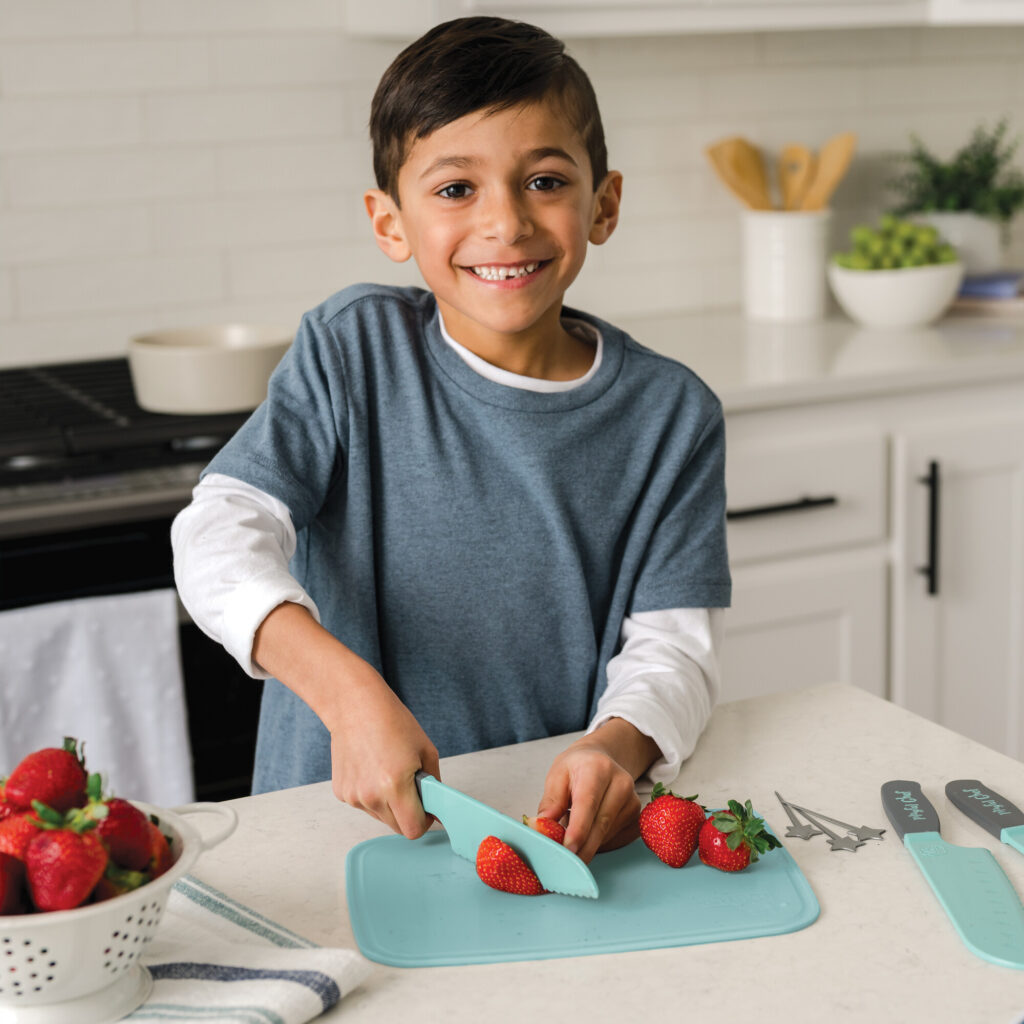
- “How do we keep our cutting board from sliding?”
- “How might we fix it if we added too much milk?”
3. Discover Their Creative Style
where ‘abstract frosting swirl’ becomes a legitimate art movement…
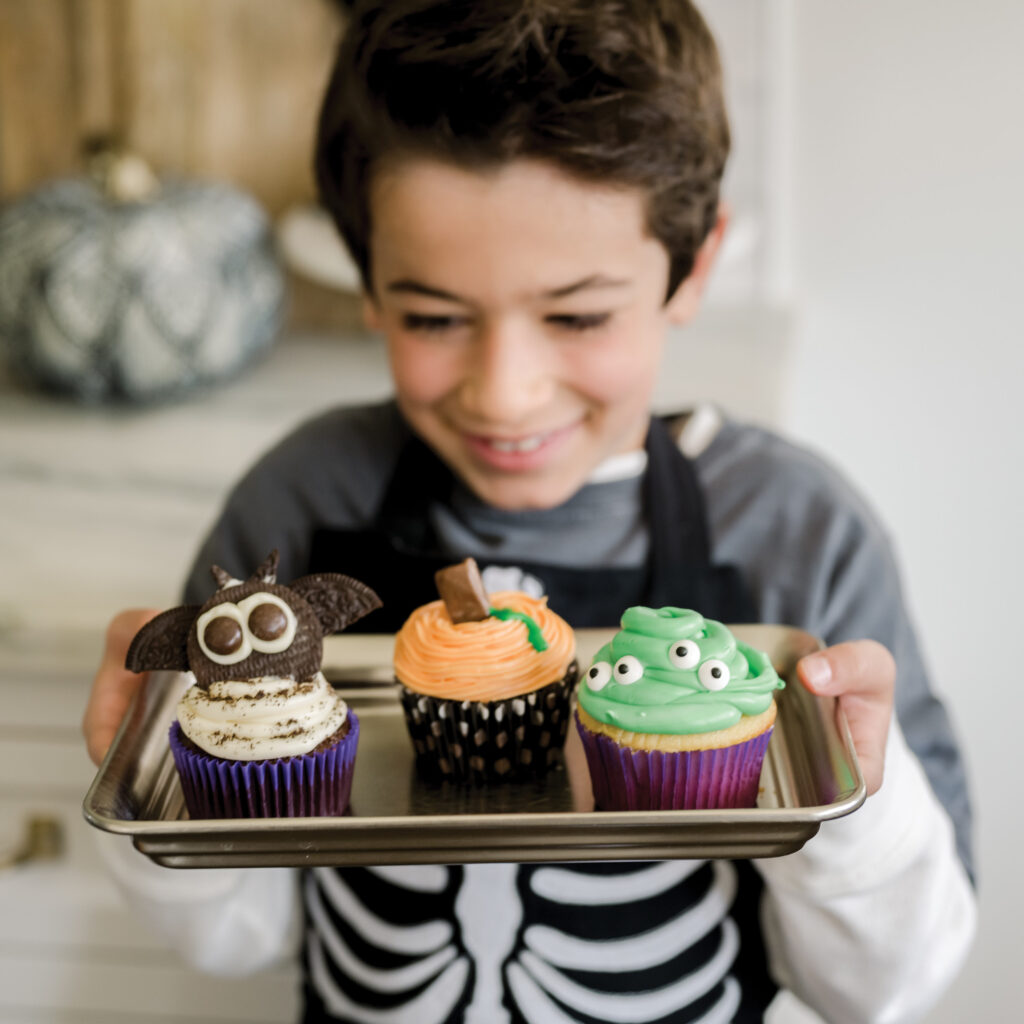
Kids explore flavor, color, and presentation to express their unique style.
- “Which colors or toppings feel the most you today?”
- “Do you want this to look silly, fancy, or colorful?”
- “What shape or pattern should we try next?”
- “How would you decorate this if it were for a party?”
4. Practice Their Excutive Functioning
a fancy way of saying: follow steps, stay focused, and don’t wander off mid-recipe…
Cooking builds planning, sequencing, organization, and clean-up habits.
- “What’s the first step before we start cooking?”
- “Can you check the recipe and tells me what comes next?”
- “Where should tools go when we’re done with them?”
- “How can we divide tasks so we finish on time?”
“Good-Enough” Moments That Matter
also known as: the perfectly imperfect masterpieces you’ll photograph forever…
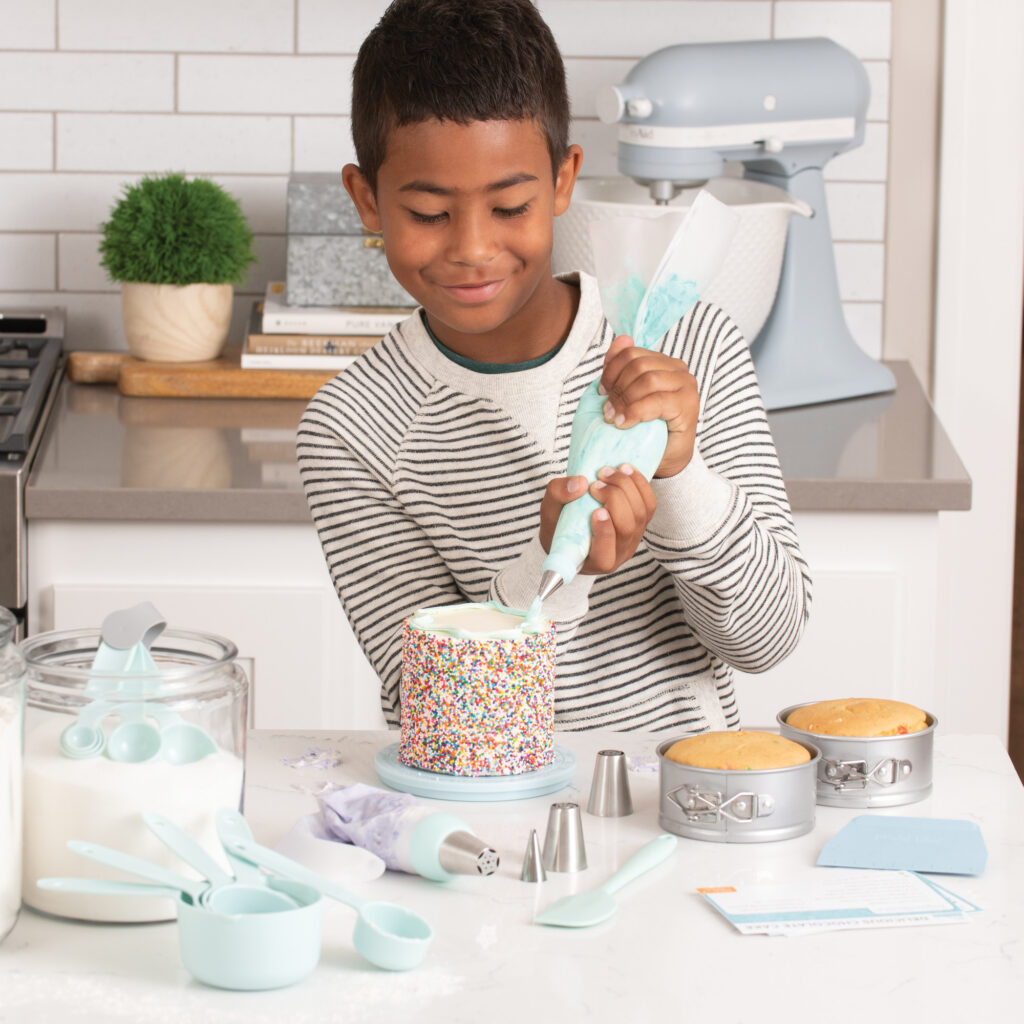
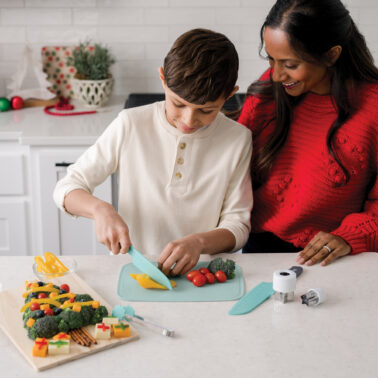
Kids don’t need perfect frosting swirls or flawlessly chopped veggies to learn. These “good-enough” wins help build lifelong confidence:
- The fruit salad has giant strawberry chunks – that’s their technique evolving
- The cupcake frosting runs off the side – but they did it themselves
- The sandwich looks a little wiggly – but they followed the steps and stayed focused
- Their pancake flips sideways – and their response is “Oops! Looks silly – but still delicious”